
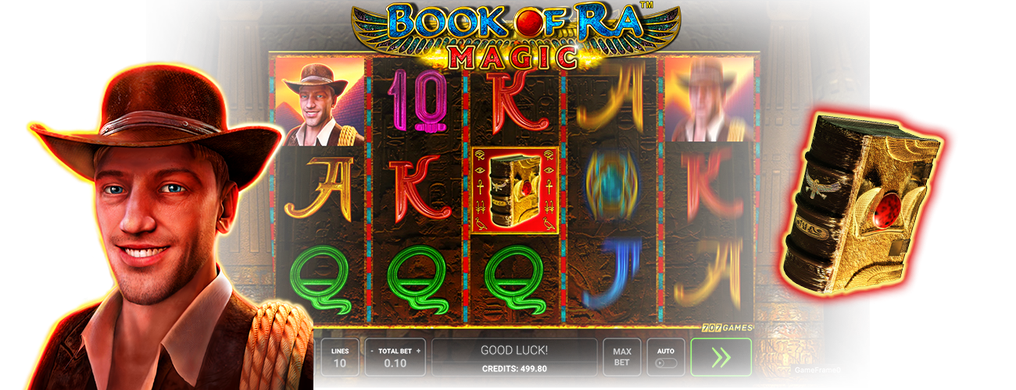







Learn how to play this Magic variant of Book Of Ra in Netherlands: demo, limits, pace, deposit and payout.
Imagine: after dinner, you want to relax for a bit, but you notice that 'a bit' quickly turns into longer than planned. It helps to treat your session as a small project: start, play, stop. It sounds exaggerated, but it prevents you from playing on autopilot.
Start with the basics: choose where you play (mobile or desktop), turn off notifications, and determine your maximum playing time in advance. In Netherlands, the gaming environment is usually equipped with features for responsible gaming, such as limits and breaks. Use these tools before you even make one spin, so you don't have to negotiate with yourself later.
Only then look at the game itself. Open the information panel, check how winning combinations are counted, and where you change the bet. Many players click through directly because it "seems clear enough," and are then surprised by settings they have unconsciously changed.
Make it practical: choose a fixed bet for a block of spins, agree with yourself when you'll pause (for example, after a notable moment), and stop as soon as your timer goes off. You don't have to prove anything to the game. You are there to play with control, not to chase after the screen.
Imagine: you're playing on mobile and suddenly everything goes faster, harder, more intensely. It's not the game getting 'stronger', but your pace getting out of control. That's why a good session starts with settings, not with tension.
First, set your standard pace: play manually if you notice you're prone to impulse. If you use auto-spin, choose a fixed number of spins in advance and make a deal with yourself not to intervene mid-way because you get irritated. That's precisely when people make mistakes: not during wins, but during frustration.
Then choose a bet that fits your session budget. Not 'what feels good,' but what allows you to play calmly. A useful approach is to work in blocks: one bet, one block of spins, a short break, and only then decide again. This way you maintain an overview and can honestly say afterwards what you have done.
Conclude this section with a stop rule that doesn't depend on luck. Time works better than a profit target. A profit target feels like a promise you can't enforce, while a timer is simple: it goes off, you stop.
Imagine: you see the same title on multiple platforms and think it's the same everywhere. Yet the experience often differs in the surrounding environment: payment options, account settings, support, and where you find limits. These are precisely the things that determine whether playing remains smooth.
Choose a platform that accepts players from Netherlands and clearly shows where you set your deposit limit, session timer, and pause button. If you have to search for those settings, chances are you won't use them. Also pay attention to how the platform communicates with you: if notifications keep pushing you to play longer, turn them off or choose a different environment.
Complete your account before you play. That means: fill in your details neatly, set up security, and check where your transaction overview is located. If questions arise later about payments or withdrawals, you don't want to have to dig first.
And very important: describe it simply for yourself. 'I only play when I am rested.' 'I play for a maximum of X minutes.' 'I only increase my bet at the beginning of a block.' These are not pretty slogans, but rules that work.
Imagine: you like short, clear sessions and you don't want the game to force you to linger. Then an approach where you play in blocks and plan breaks often suits better than 'just spinning continuously'. You'll notice sooner whether you're still sharp, or if you're just clicking because the screen asks for it.
During play, look at yourself, not at the animations. Do you feel restless, do you want to go faster, or are you thinking about 'recovering losses'? These are signals, not strategy. The smartest thing to do then is to slow down or stop.
Also make your environment suitable. If you play on mobile in bed, the threshold goes down and the pace goes up. If you play at a table with a timer, it remains manageable. You don't have to turn your life upside down, but you can choose a setting that helps you.
Imagine: you start without a plan, and halfway through you wonder how much you've already bet. That feels vague, and vagueness is the fastest route to impulse. Therefore, use a short checklist that you complete every session, even if you think you don't need it.
First: timer on. Then: determine session budget and divide into blocks. Next: set bet and play one block of spins without changing. After the block: short break away from the screen, and only then do you decide whether to start a new block.
At the end, you consciously log off. Log out, briefly check your transaction overview (so you don't have to guess what happened based on feeling), and then do something else. The latter sounds minor, but it gives your brain a clear 'done' button.
Paying And Payout With Less Hassle
Imagine: you want to withdraw money and you get impatient because you keep checking the status. That impatience often leads to a strange reflex: playing again to avoid feeling the wait. Therefore, make the process calm and predictable.
|
Item |
What You Set Up |
What You Check In Advance |
Why This Is Useful |
|
Deposit |
Choose payment method |
Confirmation, limits, transaction overview |
Fewer errors and more control |
|
Deposit |
Budget per session |
Maximum per day/week, planned playing time |
Prevents impulsive additional deposits |
|
Withdrawal |
Withdrawal method |
Data is correct, status page, notifications |
Clear process, less anxiety |
|
Verification |
Complete account |
ID and basic details (if requested) |
Less delay with requests |
|
Limits |
Time and deposit limit |
Start period, adjustment rules |
Helps to stop without discussion |
|
Pause |
Set time-out |
Duration, moment of activation |
Protection on 'busy' days |
|
Security |
Account protection |
Strong password, recovery options |
Less hassle regarding access |
|
Support |
Prepare contact |
Time window, language, brief problem description |
Faster resolution for questions |
First, arrange your account and security, then your payment. Choose a method you understand, check that your details are correct, and keep your transactions clear by not making too many small deposits in a row. For a withdrawal, check the status a maximum of once or twice a day, not every hour.
If support asks for additional information, respond concisely and completely. One complete answer works better than five separate messages. This way, you maintain control, even when you have to wait.
Limits, Time-Out, and Self-Exclusion in Practice
Imagine: you notice that on some days you get irritated faster and still want to keep playing. Then it's not a matter of 'being strong', but of organizing protection. Limits and breaks are not there to take away pleasure, but to help you stop without arguing with yourself.
At least set a deposit limit and a session timer. Add a time-out for days when you notice you're not playing calmly. And if you notice that control is slipping away structurally, self-exclusion is a mature choice: you remove the possibility of impulsively returning.
In Netherlands, this is part of playing within the applicable rules. You don't need to use big words. You only need to use the buttons that protect you.
Imagine: you start 'just for the bonus', but you forget your timer, and suddenly it's late. A plan prevents the game from taking over. And a plan doesn't have to be big: three agreements are enough.
Agreement one: when you play (only when you are rested). Agreement two: how long (timer, not by feeling). Agreement three: how you stop (after a block, or as soon as you notice emotion taking over). Only then do you start.
You maintain an overview by playing in blocks and walking away from the screen for a moment after each block. That sounds simple, but it breaks the 'click-rush' that many players get in a long session. This way, it remains entertainment, not a competition against yourself.
Imagine: you choose a session budget, but halfway through it feels like you 'just need one more block'. That's normal, and that's precisely why you make your budget concrete. Divide it into three or four blocks, and agree that you will never add an extra block based on mood.
Choose a fixed bet per block and do not change it during the block. If you want to increase, first pause and only decide at the beginning of the next block. This prevents you from increasing out of frustration.
After each block, check two things: remaining time and remaining budget. If one of the two is gone, you stop. Not because you 'have to', but because you take your own rules seriously.
Imagine: you notice that you click faster because a series of spins 'does nothing'. That's the moment when you should slow down. Speed gives the feeling that you are regaining control, but often it is the beginning of thoughtless playing.
Play manually and create a mini-anchor: after every ten spins, stop clicking for one second and look at your balance and timer. That sounds almost childish, but it works because it brings your brain back to choice instead of reflex.
If you use auto-spin, set a limit on the number of spins and keep your hands away from the bet button. As soon as you feel the urge to "fix" with a higher bet, close it and take a break.
Imagine: you're playing on mobile while waiting and you lose track of time. Mobile is convenient, but often more prone to impulsivity. Desktop is usually calmer, as you sit down more consciously and work faster with a timer.
Therefore, make a simple rule: mobile only for short sessions or practice, desktop for planned sessions with budget and breaks. Turn off notifications, put your phone away when playing on desktop, and avoid starting "just for a moment" in between.
Your goal is not maximum spinning. Your goal is a session you don't regret afterwards.
Imagine: a deposit gets stuck or a game doesn't load, and you feel irritation. The pitfall is that you still start playing "to get rid of the feeling". Do the opposite: stop first, minimize the problem, and address it properly.
Note what happened: time, amount (if it concerns payment), and what you saw on the screen. Then contact support with one clear question. Keep it factual. The less emotion, the faster it is usually resolved.
In the meantime, use your own protection. If a problem makes you restless, activate a time-out and come back later. Playing should be relaxation, not a way to park stress.
Imagine: you log out, but you keep thinking about it and want to return immediately. A clear end ritual helps then. Log out, briefly check your transaction overview, and then do something physical: get water, take a short walk, get some fresh air.
Only plan your next session when you truly have space for it, not because you "want to recover" something. If you notice you want to return due to restlessness, that's the time to take a longer break or set stricter limits.
This way, the experience remains balanced: you play when it suits you, you stop when you agree to, and you don't let the screen dictate what you do.
Start in practice mode and treat that session as a test: you test tempo, bet buttons and the information panel, not your luck. Set a timer, play a short block of spins and stop exactly on time, so you immediately train a good habit. Only then do you create a session budget for real play and set your limits. If you notice that you already want to go faster during practice, that is a signal to be extra strict with breaks later.
A session timer and a deposit limit are the basics, as they solve two different problems: playing too long and making impulsive additional deposits. Add a break rule, for example after each block of spins, so you don't get stuck in a click-rhythm. If you notice that you often want to increase your bet after a loss, tighten your betting rules: only adjust at the beginning of a new block. You don't have to do everything at once, but you do have to choose what you will truly follow.
Stop immediately and make it physical: stand up, walk away from the screen, and breathe calmly. Only then look at your timer and budget and decide again, instead of pushing through. Frustration is not a strategy, it's emotion, and emotion makes your betting decisions worse. If this happens more often, use a time-out and only play again when you are calm, with stricter limits.
Make a simple rule that mobile is only for short sessions with a timer, and preferably play manually. Turn off notifications and choose a moment when you are not rushed, otherwise "just for a moment" automatically becomes longer. Use a break ritual that changes your posture: get water or take a short walk. If you notice you keep tapping, that's a sign that you should stop and do a planned session on desktop later.
Ensure your account details are correct before requesting a withdrawal and keep your transactions clear by not making too many small deposits. Agree with yourself to check the status sparingly, for example once or twice a day, so you don't get stressed. Respond to support questions briefly and fully in one message, as this prevents back-and-forth. And importantly: do not play to forget about waiting, as that often leads to impulsivity.
If you notice that you keep coming back when you actually wanted to stop, a regular break is often too weak. Self-exclusion removes the impulse option and gives you peace to think clearly again. It's not a punishment, but protection for moments when your behavior no longer matches your plans. If playing starts to affect your sleep, mood, or finances, it's wise to choose stronger protection and possibly seek support.
Choose a stop moment that is not dependent on winning, but on time or blocks of spins, because that is predictable. Set a timer and make an agreement that you will stop when it goes off, even if it's getting exciting. Conclude with a ritual: log out, briefly review the transaction overview, and then do something else away from the screen. If you find yourself wanting to return, consciously plan your next session for another time instead of immediately continuing.
Book Of Ra Magic is your trusted platform for exploring everything about the Big Bass Hold & Spinner Megaways game. Known for its simplicity, excitement, and potential for big wins, Book Of Ra Magic has become a sensation among Indian players.
Copyright © 2026 Book Of Ra Magic| All Rights Reserved